


A Joint Publication
This publication titled AI for Energy, Water, and Waste Management: Unlocking Opportunities, Navigating Challenges, and Learning from Experience is co-produced by by the Veolia Institute and Microsoft.
This joint report provides a robust overview of the power of AI for managing energy, water and waste – referred to here collectively as environmental services. It seeks to characterize, and when possible, quantify, the benefits and costs of AI for this purpose.
It is an interdisciplinary review that brings together and shares the experiences and expertise of different stakeholders including researchers, leaders, and policymakers in academia, private sector and civil society to explore state of the art, best practices from the field and expert analysis so as to have a comprehensive overview of current knowledge and blind spots on this topic as well as several documented case studies.
Read:
- Foreword by Estelle Brachlianoff, CEO of Veolia ; and Brad Smith, Vice Chair & President of Microsoft
- Introduction de Melanie Nakagawa, Chief Sustainability Officer of Microsoft ; and Dinah Louda, President of the Veolia Institute
I. Invest in AI to accelerate sustainability solutions
As the world grapples with escalating environmental crises, the integration of artificial intelligence (AI) into sustainability efforts is becoming increasingly essential. This first section highlights how AI is being used and explores its transformative potential across various sectors, including wastewater management, decarbonizing the energy sector, and materials discovery while reinforcing the importance of responsible implementation and scaling to ensure that these technologies deliver lasting positive impact.
Philippe Aghion, Collège de France, INSEAD and the London School of Economics
Céline Antonin, OFCE
Lint Barrage, ETH Zurich
Ursula Eicker, Concordia University
Shahin Masoumi-Verki, Concordia University
Kathryn Kaspar, Concordia University
Suchit Ahuja, Concordia University
Damon Matthews, Concordia University

Nurul Aqilah Mahmud, Universiti Teknologi MARA
II. Develop digital and data infrastructure for the inclusive use of AI for sustainability
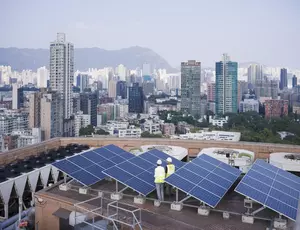
The full potential of AI can only be realized when supported by robust data ecosystems and effective digital infrastructures. The second section of this report explores critical components for successfully deploying AI in environmental contexts: data access, quality, infrastructure, governance, and ethics. All these elements are essential for harnessing AI’s capabilities in sectors such as energy, water and waste management, where precision, efficiency, and scalability are crucial.


III. Minimize resource use expand access to carbon-free electricity, and support local communities
This section focuses on two crucial dimensions of AI’s environmental footprint: energy use and water consumption. There has been much public attention over the last few years on AI’s energy use. More recently, concerns have been raised about data center water use. Understanding these impacts is essential for designing AI systems that align with sustainability goals and for mitigating the environmental consequences of their rapid growth.

Eric Masanet, University of California, Santa Barbara
IV. Advance AI Policy principles and governance for sustainability
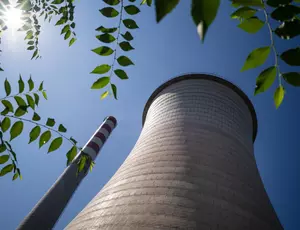
This section explores the evolving role of governance in leveraging AI for climate change mitigation and adaptation through two crucial focus areas: governing AI deployment to enhance planetary stability and governing data to ensure it is standardized, comprehensive, and interoperable. Together, these topics shed light on how the responsible development and use of AI can contribute to a more sustainable future.


V. Build workforce capacity to use AI for sustainability
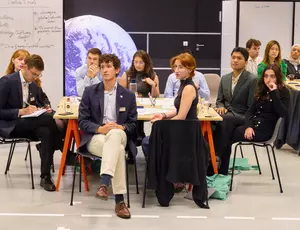
This section examines workforce dynamics and the skills needed to unlock the transformative potential of AI for a sustainable transition. The articles highlight the significant role of AI in reshaping workforce and collaboration but also in driving the twin transitions toward sustainability and digital transformation.


Mélanie Macé, Veolia
Morgane Vidal, Renault, former Veolia